How to Find Influencers for Your Brand: A Complete Influencer Marketing Strategy
Did you know that influencer marketing is one of the most profitable channels?
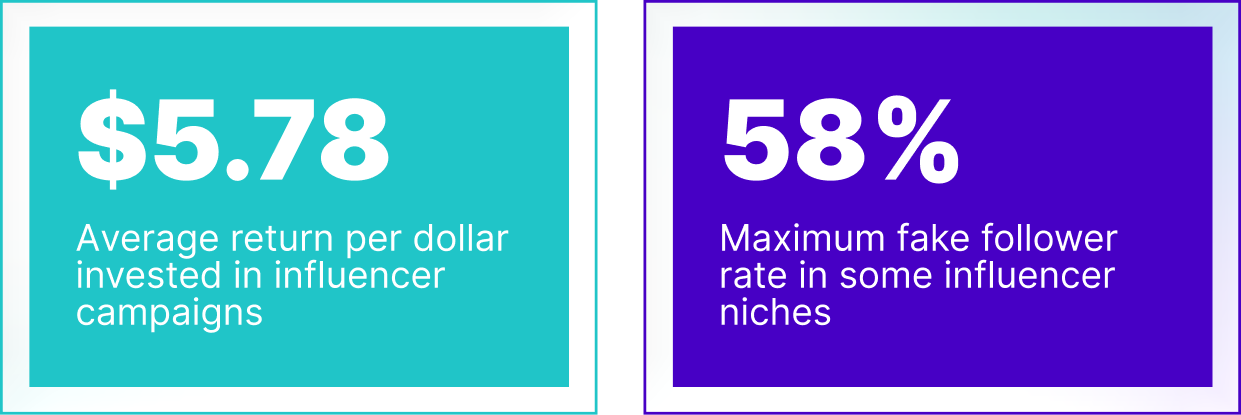
According to influencer marketing ROI statistics, brands earn an average of $5.78 for every dollar invested — and the most effective campaigns return up to $20 per dollar. But there's one problem most teams face: finding the right social media influencer is difficult and time-consuming, and the rate of fake influencers in some niches reaches 58%.
This article presents a step-by-step framework: what types of influencers exist, how to set realistic goals, how to find influencers for your brand, and how to evaluate the ROI of influencer marketing campaigns.
What Is an Influencer and What Types Exist?
Before you start searching, it's important to understand the influencer meaning in modern marketing: choosing an influencer is not a matter of taste — it's a matter of goals. Audience size, engagement level, and the nature of the connection with followers dramatically affect your influencer campaign strategy.
Classification by Audience Size
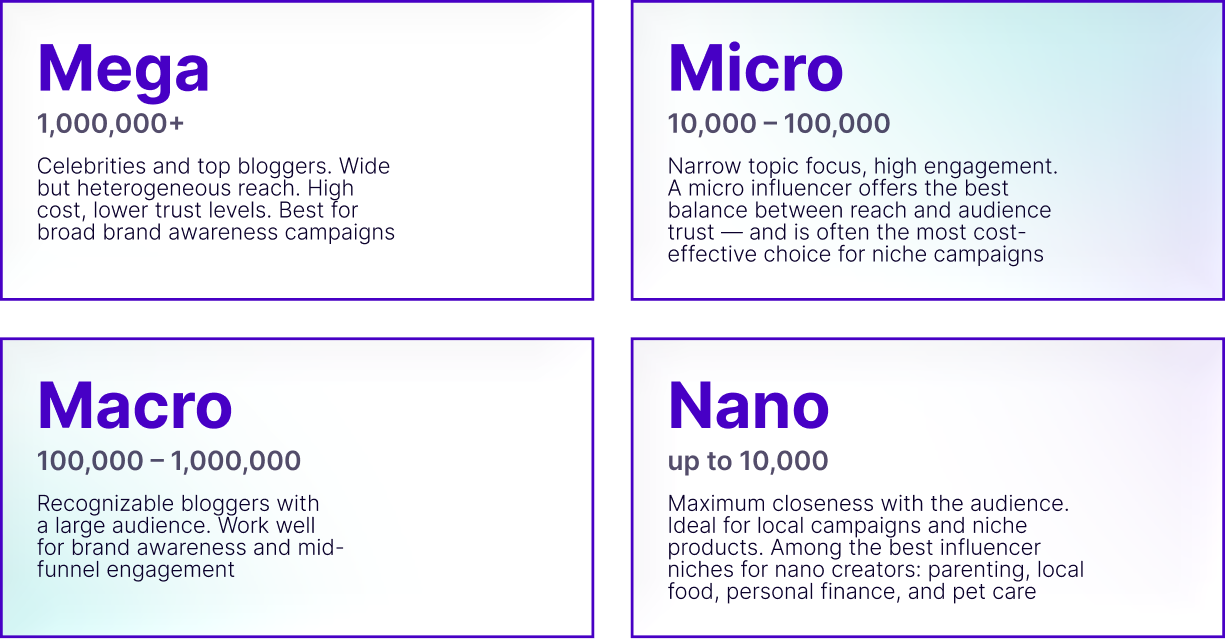
Mega — 1,000,000+ Celebrities and top bloggers. Wide but heterogeneous reach. High cost, lower trust levels. Best for broad brand awareness campaigns.
Macro — 100,000 – 1,000,000 Recognizable bloggers with a large audience. Work well for brand awareness and mid-funnel engagement.
Micro — 10,000 – 100,000 Narrow topic focus, high engagement. A micro influencer offers the best balance between reach and audience trust — and is often the most cost-effective choice for niche campaigns.
Nano — up to 10,000 Maximum closeness with the audience. Ideal for local campaigns and niche products. Among the best influencer niches for nano creators: parenting, local food, personal finance, and pet care.
Strong vs Weak Social Ties
Researchers describe two types of connections between a social media influencer and their audience that directly affect campaign performance:
→ Strong ties — characteristic of nano and micro influencers. Frequent interaction, emotional closeness, similarity to followers. The audience perceives them as "one of their own."
→ Weak ties — characteristic of macro and mega-influencers. Wide reach, but lower engagement and less personal trust.
Match the Influencer Type to the Sales Funnel
Understanding how to work with influencers effectively starts with matching the creator type to your funnel stage:
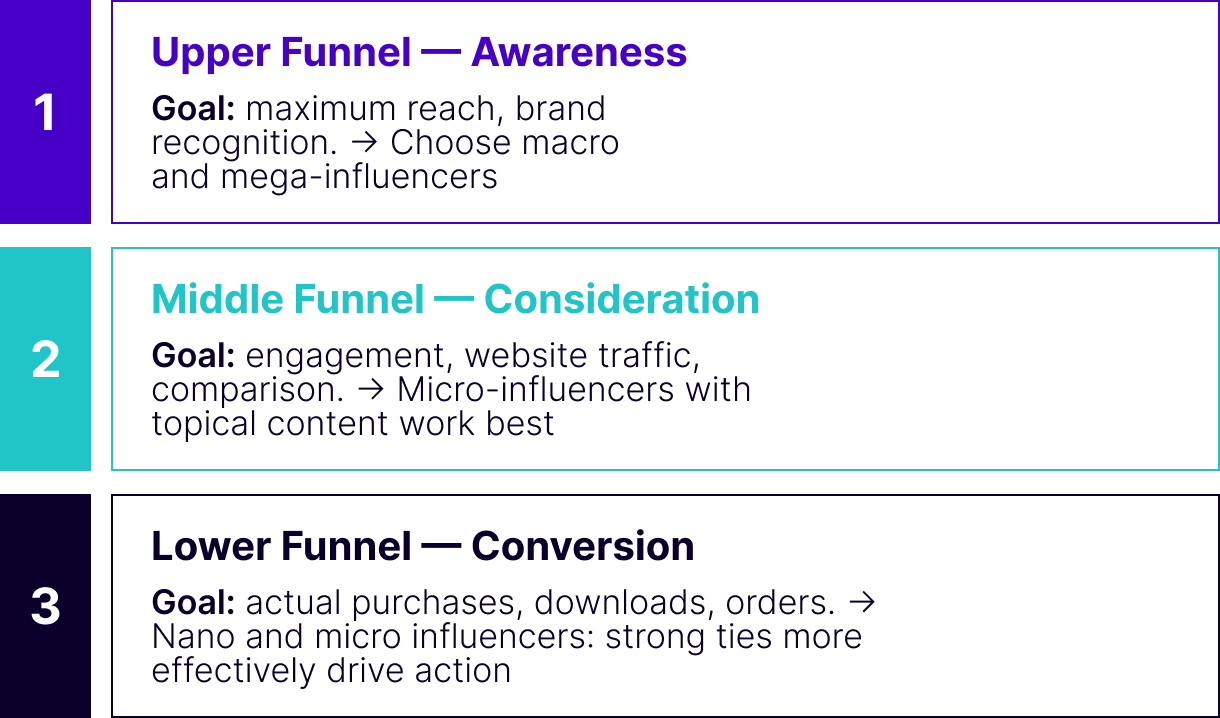
- Upper Funnel — Awareness Goal: maximum reach, brand recognition. → Choose macro and mega-influencers.
- Middle Funnel — Consideration Goal: engagement, website traffic, comparison. → Micro-influencers with topical content work best.
- Lower Funnel — Conversion Goal: actual purchases, downloads, orders. → Nano and micro influencers: strong ties more effectively drive action.
How to Set Realistic Goals in Influencer Marketing
The most common mistake is launching influencer marketing campaigns without clear KPIs. A realistic influencer campaign strategy is specific, measurable, and tied to a funnel stage.
Influencer Marketing Metrics: Benchmarks
To build an effective strategy, rely on average influencer marketing metrics:
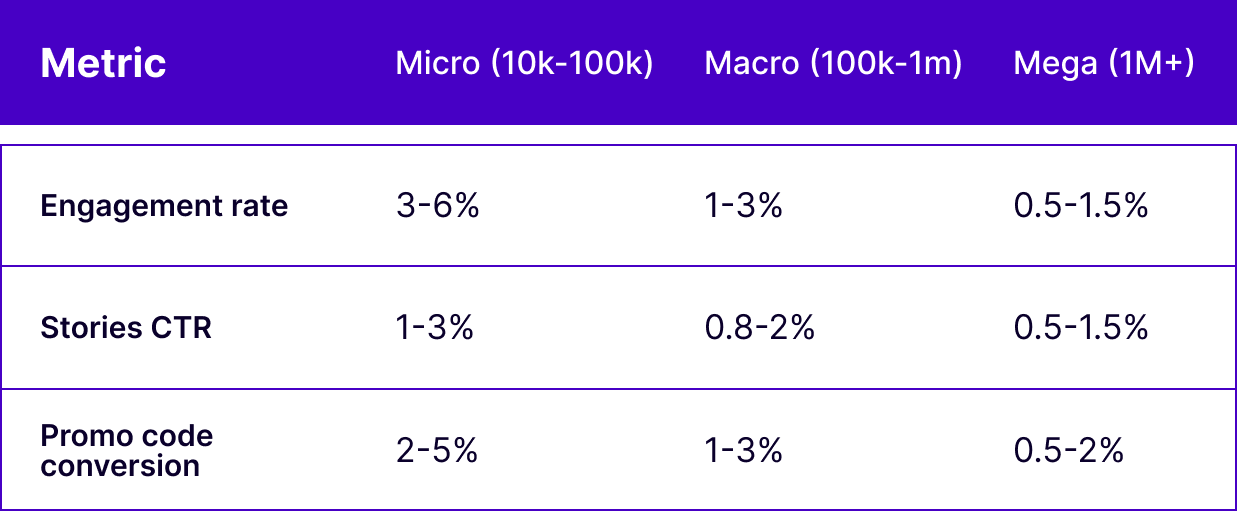
Micro influencers (10,000–100,000 followers): engagement rate 3–6%, Stories CTR 1–3%, promo code conversion 2–5%.
Macro-influencers (100,000–1,000,000): ER 1–3%, CTR 0.8–2%, conversion 1–3%.
Mega-influencers (1,000,000+): ER 0.5–1.5%, CTR 0.5–1.5%, conversion 0.5–2%.
If your campaign expectations exceed these benchmarks — adjust your KPIs or allocate a larger budget and work with multiple influencers simultaneously.
Example Calculation: ROI of Influencer Marketing
Let's make the ROI of influencer marketing tangible with a real example. Imagine a micro influencer with 50,000 Instagram followers placing an ad in Stories.
Stories reach averages around 36% of the audience — approximately 18,000 people will see your ad. Of those, 2% will click the link — that's 360 potential buyers. If your site's conversion rate is 3%, you get around 11 orders.
At an average order value of €20, revenue comes to approximately €220, with a placement cost of €75. Campaign ROAS: 2.9.
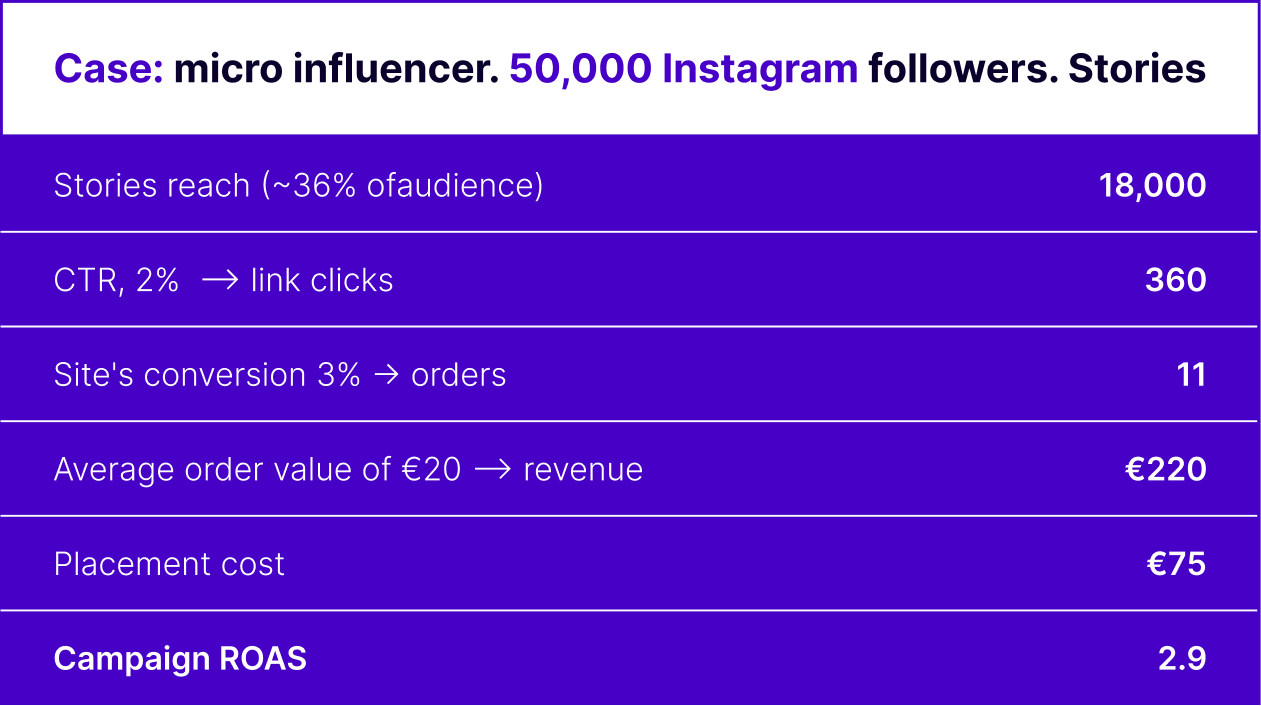
If an acceptable ROAS for your business is 3 or higher — fine-tune the conditions: increase average order value through upselling, choose a blogger with a higher CTR, or test Reels instead of Stories. If ROAS of 2.9 works — the campaign is profitable and can be scaled.
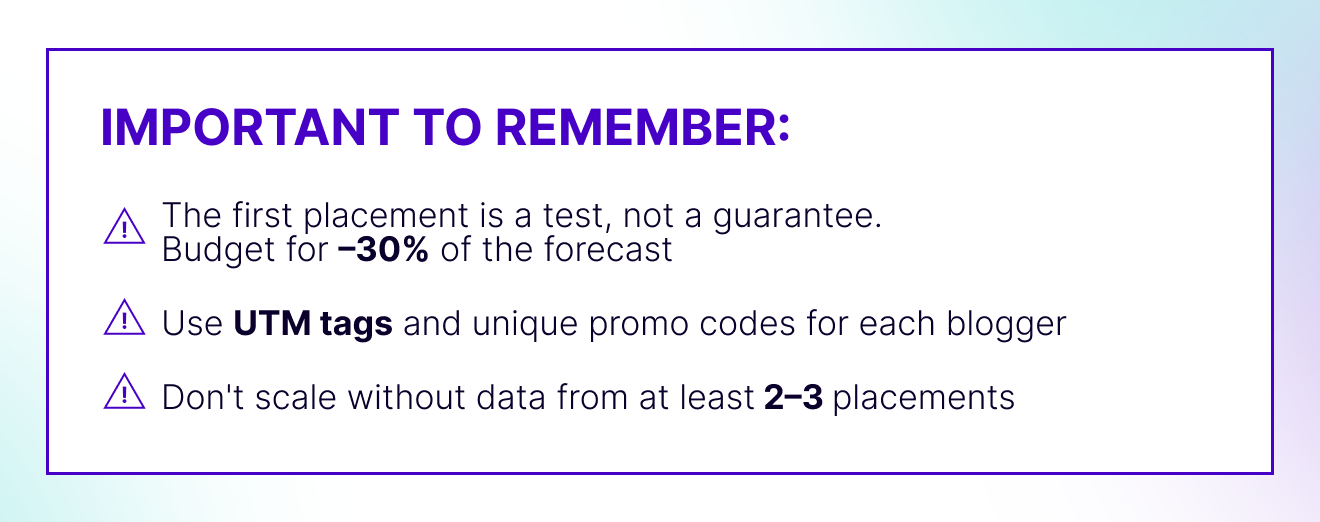
Important to Remember: The first placement is a test, not a guarantee. Budget for –30% of the forecast. Use UTM tags and unique promo codes for each blogger. Don't scale without data from at least 2–3 placements.
How to Find Influencers for Your Brand
Manual searching is one of the biggest time sinks in influencer marketing. Marketers spend hours scrolling through Instagram, building spreadsheets, switching between tools — and still can't answer: is this blogger's audience even real?
Main Approaches
→ Manually on social media — searching hashtags to find influencers on Instagram or TikTok. The slowest method, suitable only for one-off collaborations.
→ Recommendations and referrals — fast, but limited: you stay within the bounds of someone else's experience.
→ Influencer search tool — the most effective option. A dedicated free influencer search tool or paid platform lets you find micro influencers and macro creators at scale, with filters by niche, audience size, engagement rate, and geography.
How to Get Influencers to Promote Your Product with Trendin
Trendin is an influencer marketing platform and influencer search tool with a database of over 300 million profiles on Instagram, YouTube, and Facebook. Instead of days of manual work — real-time access to the largest influencer database available.
Influencer campaign ideas become actionable when you can filter by niche, audience quality, and past performance in seconds.
How to Spot a Fake Influencer
Even after you find influencers for your brand by niche and reach, verifying audience quality is mandatory — fake influencers can inflate follower counts by up to 58%.
Each influencer card in Trendin gives you:
→ Audience quality: share of real followers vs bots and mass-followers — the fastest way to identify a fake influencer
→ Demographics: age, gender, geography — confirm the audience matches your target
→ Engagement rate dynamics: sharp spikes signal artificial inflation
→ Audience overlap: avoid duplicating reach across influencer marketing campaigns
→ Competitor analysis: see which influencers are active in the best influencer niches for your category
How to Evaluate Influencer Marketing Metrics and Campaign ROI
Tracking results only after a campaign ends is too late. Monitoring influencer marketing metrics in real time lets you adjust promptly: reallocate budget, change format or posting frequency.
Trendin's built-in dashboard keeps all data for each influencer, post, and result in one place, updated in real time.
A 5-Step System to Track ROI of Influencer Marketing Campaigns
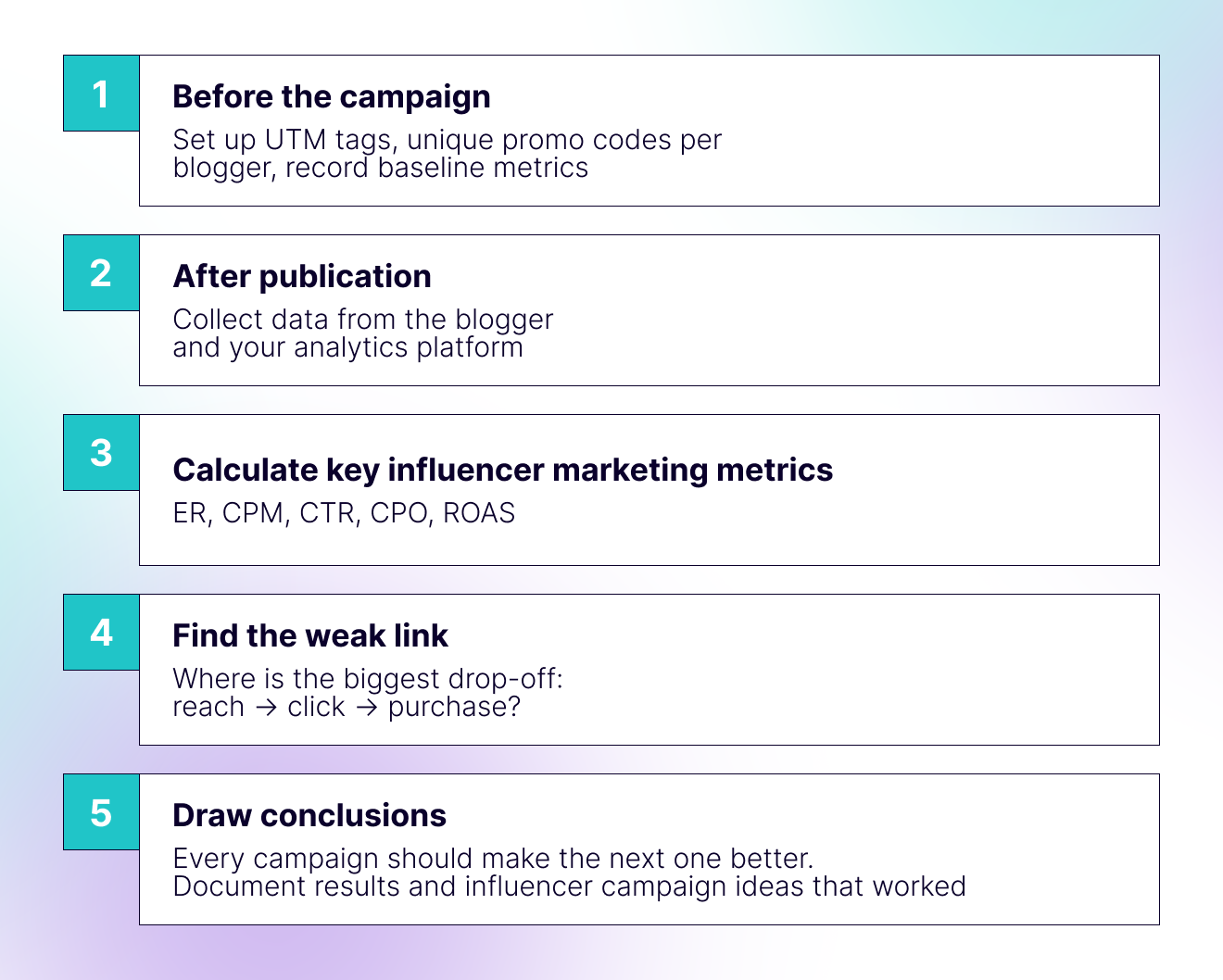
- Before the campaign — Set up UTM tags, unique promo codes per blogger, record baseline metrics.
- After publication — Collect data from the blogger and your analytics platform.
- Calculate key influencer marketing metrics — ER, CPM, CTR, CPO, ROAS.
- Find the weak link — Where is the biggest drop-off: reach → click → purchase?
- Draw conclusions — Every campaign should make the next one better. Document results and influencer campaign ideas that worked.
Trendin includes a report tool that takes just 7 minutes: add media files, metrics, custom text, and branding — export to PPTX, XLS, or share via link.
Conclusions
Influencer marketing grows on average by 33.11% every year — and the ROI of influencer marketing makes it one of the highest-returning channels available to modern brands.
A successful influencer campaign strategy requires three pillars: the right influencer type matched to a funnel stage, clearly defined influencer marketing metrics with realistic benchmarks, and verified audience quality — free of fake influencers and bots.
The main challenge for most teams is not knowledge — it's tools. It takes days to find influencers for your brand manually, audience verification is scattered across services, and reporting becomes a project in itself.
Trendin is the influencer search tool and influencer marketing platform that brings everything together — from helping you find micro influencers and social media influencers to managing influencer marketing campaigns and tracking the ROI of influencer marketing in real time.


Explore insights
that move you forward
Fresh perspectives on influencer trends straight from the field.